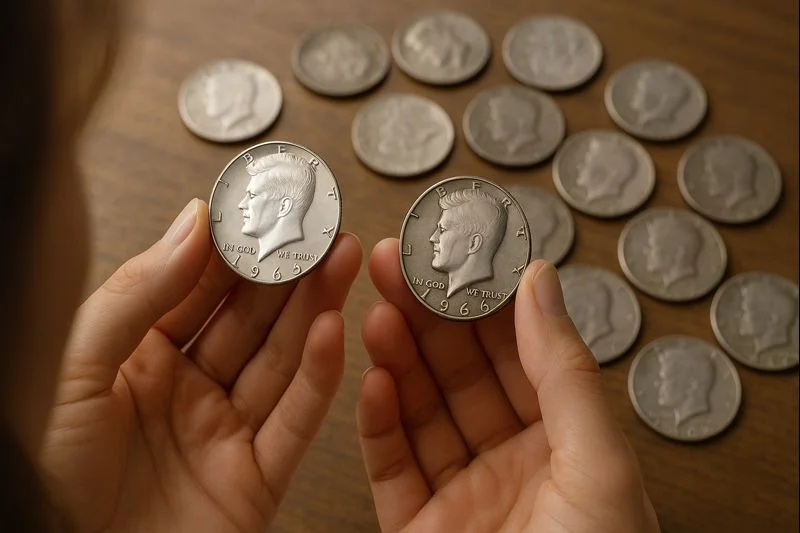
The distinction isn’t obvious until you know where to look.
Identifying a high-value 2003 penny requires understanding specific production standards.
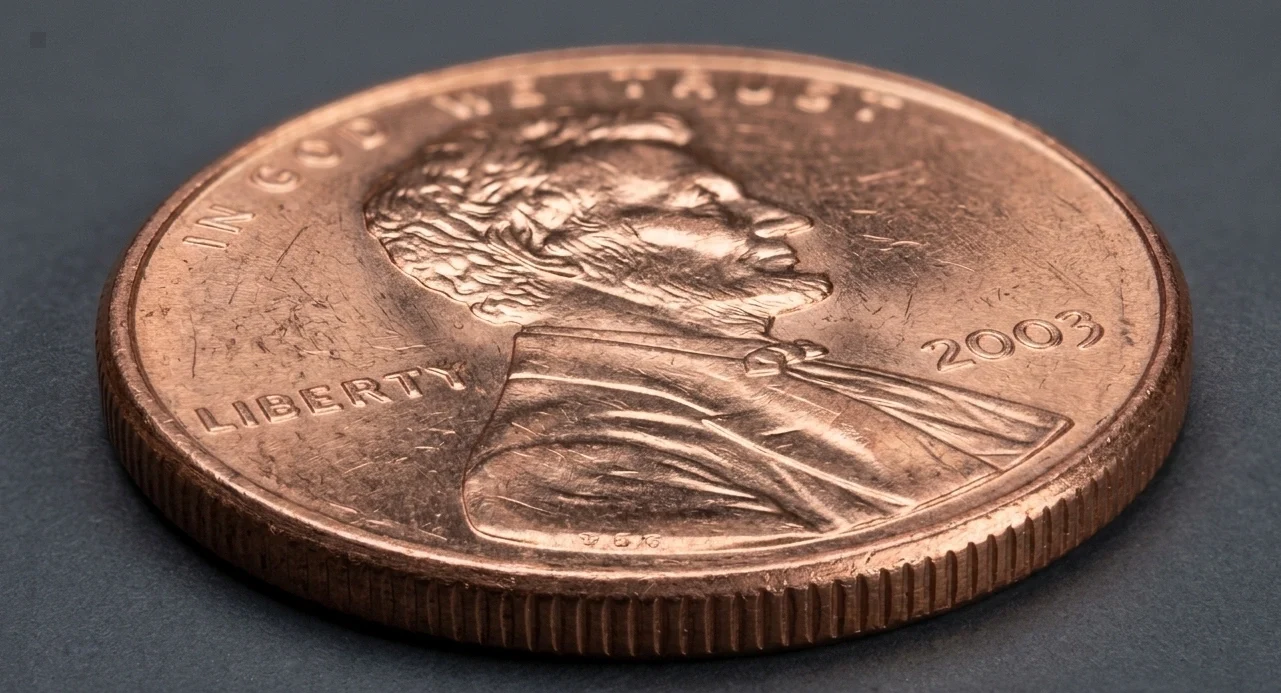
Massive output during this period created a surplus of common examples.
Only specific errors and exceptional preservation transform a standard coin into a financial asset.
| Property | Value |
| Nominal Value | $0.01 |
| Material | Zinc with Copper coating |
| Mass | 2.50 grams |
| Shape | Round |
| Diameter | 19.05 mm |
| Thickness | 1.52 mm |
| Edge Type | Plain |
Using a core made of zinc reduces the overall manufacturing cost.
Outer layers of copper provide protection against air for the internal metal.
Breaking this protective layer leads to the formation of small bubbles.
Production Statistics by Mint Branch
Distribution of manufacturing volumes across branches affects the rarity of specific errors.
Each facility used its own identification marks to track production origin.
2003 Mintages:
- Philadelphia (no mark): 4,448,000,000
- Denver (D mark): 3,800,000,000
- San Francisco (S mark): 3,290,000
Total output exceeded eight billion individual units.
Coins from San Francisco were produced exclusively for Proof sets.
Market Price Dynamics
Investment appeal for coins in top condition shows consistent growth.
Annual price recalculations rely on data from major auction platforms.
Price Change for MS68 Grade: 2021 → $180 2022 → $195 (+8.3%) 2023 → $215 (+10.2%) 2024 → $240 (+11.6%) 2025 → $275 (+14.5%) 2026 → $320 (+16.3%)
Value Drop Coefficients when grade decreases:
- Moving MS69 → MS68: 85% reduction
- Moving MS68 → MS67: 70% reduction
- Appearance of one deep scratch: 95% loss of premium
Consistent demand for flawless items stems from a lack of supply in top categories.
Maintaining original copper luster for twenty-three years increases the value of surviving specimens.
Technical Defects and Variations
Distinguishing a collectible coin often involves finding a production cycle error.
Examining surfaces under a microscope reveals tiny deviations from the norm.
Types of Significant Defects:
- Doubling of design elements on the front side
- Off-center strikes relative to the metal disk
- Wide gap between the letters AM in the word AMERICA
- Foreign particles trapped under the copper layer
Finding a Wide AM variation for the 2003 issue is a controversial topic.
Most experts record this specific feature only on coins from other years.
Record Sales and Auction Statistics
Price peaks occur during the sale of coins certified by top laboratories.
Avoiding contact with other objects remains a key condition for a record.
Top 4 Sales as of 2026:
- 2003-D MS69 Red (PCGS): $4,950
- 2003-P MS69 Red (NGC): $3,800
- 2003-S PR70DCAM (PCGS): $1,100
- 2003-D 50% Off-center: $850
Final bidding depends on the intensity of the natural red color.
Darkening of the copper to a brown state reduces the price to face value.
Cause and Effect of Valuation
Price formation follows strict market laws.
Interaction of factors determines the final status of the item.
Logical Chain of Value Increase: Perfect strike → Immediate sealing → Professional grading → Auction demand → Price growth
Logical Chain of Value Loss: Entering circulation → Mechanical friction → Metal oxidation → Loss of detail → Face value
Having a certificate guarantees authenticity and simplifies future resale.
Investors prefer coins held in plastic slabs.
Surface Condition
Classification by color is mandatory for US copper coins.
Visual assessment inside the free coin value lookup app divides lots into three main groups.
Color Preservation Categories:
- RD (Red): Red color, keeping more than 95% of original luster
- RB (Red-Brown): Red with brown spots, mixed state
- BN (Brown): Brown color, complete oxidation of the surface
Price differences between RD and BN for the same grade can reach 500%.
Cleaning coins with liquids completely destroys their collectible potential.
Features of 2003 Proof Striking
Production at the San Francisco mint differs in technology.
Striking the polished metal twice creates a mirror effect.
Signs of Top Deep Cameo Quality:
- Deep mirror background without visible polish lines
- Frosted, high-contrast portrait of Lincoln
- Absence of milky spots on the surface
- Perfectly even rim
Leaving fingerprints on the mirror field turns the coin into a reject.
Storing these examples outside of original capsules is prohibited.
The number of surviving coins in high quality determines the rarity level.
Population databases allow for estimating the chances of finding a top grade.
| Grade | Population (P) | Population (D) | Rarity |
| MS66 | 450,000 | 580,000 | Low |
| MS67 | 12,500 | 18,000 | Medium |
| MS68 | 850 | 1,200 | High |
| MS69 | 12 | 15 | Extreme |
Finding a coin in MS69 condition is considered a random event.
Most bank rolls contain coins with a quality no higher than MS65.
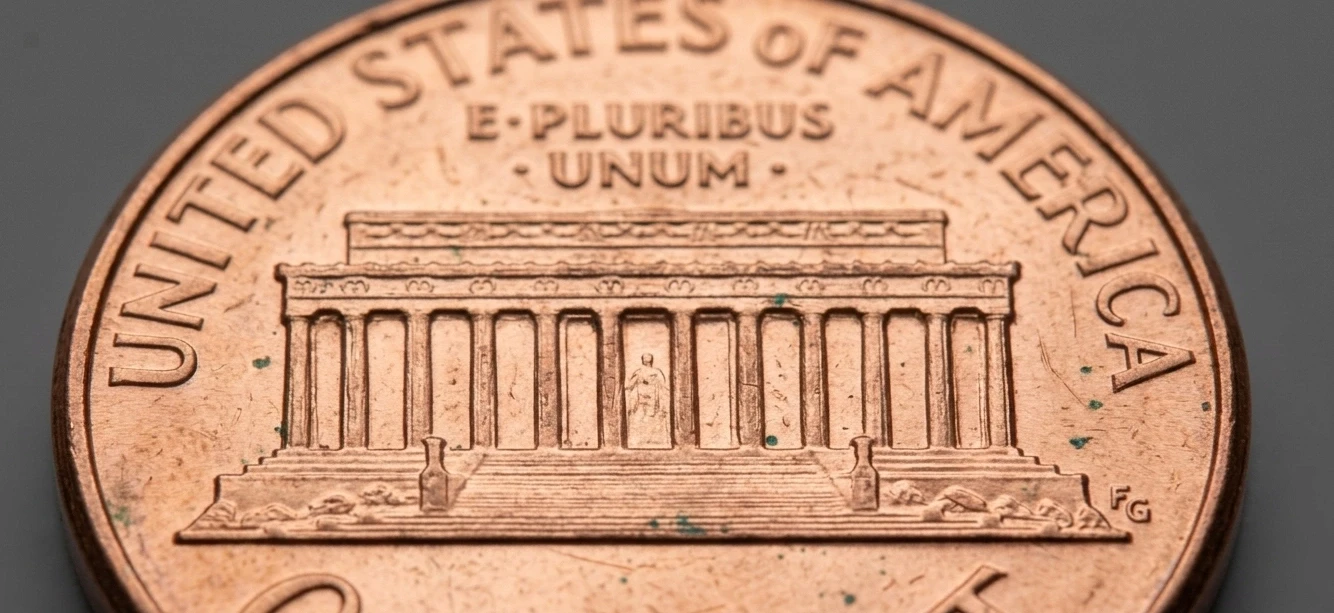
Mechanics of Wear and Degradation
Contact between coins in mint bags creates tiny dents.
These marks are known as bag marks.
Stages of Value Destruction: Impact during transport → Copper layer damaged → Oxygen reaches the inner metal → Internal corrosion → Metal chipping
The destruction process is irreversible once the chemical reaction starts.
Dry storage environments remain the only way to preserve the coin.
Investment Risk Factors
Investing in 2003 coins involves certain dangers.
The 2026 market requires careful checking of every lot.
Main Risks:
- Incorrect grading from uncertified dealers
- Artificial luster created with chemicals
- Hidden corrosion under layers of patina
- High price volatility for middle grades
Buying coins without high-resolution photos is not advisable.
Liquidity for coins below MS67 grade remains low.
Marking and Its Impact on Price
The presence or absence of a letter under the date determines the origin.
Size and clarity of the mint mark are checked for manual tampering.
Identification:
- No mark → Philadelphia
- Letter D → Denver
- Letter S → San Francisco
Or automatically via a coin identifier app free.
In 2003, the Denver mint showed a higher production standard.
Centering of the image on Denver coins is statistically better.
Market Forecast
Analytical models predict a shortage of red coins in five years.
Oxidation of copper is a natural process reducing the supply of RD coins.
Expected Price Levels by 2028:
- 2003-P MS68 RD: $450
- 2003-D MS69 RD: $6,200
- 2003-S PR70 DCAM: $1,400
Investment in modern US coins remains a stable alternative to the stock market.
Changing generations of collectors maintains interest in early 2000s issues.
Technical Rules for Error Evaluation
Struck errors are classified by the degree of deviation from the standard.
The cost of the mistake increases proportional to its visual clarity.
Error Assessment Criteria: Off-center strike → Measured as a percentage of diameter Doubling → Evaluated by the number of affected letters Die crack → Length and depth of the line are considered
The “Cud” type error on 2003 coins occurs very rarely.
Finding a large die break guarantees a price over $300.