The Kennedy half dollar forms one of the clearest chronologies in modern U.S. coinage. The series spans several metal groups, production formats, and circulation patterns. These shifts define rarity, survival levels, strike quality, and long-term value. Key dates show how the coin responded to metal markets, minting changes, and collector demand. Tracking these years helps identify scarcity, understand market behavior, and classify pieces more accurately.
A structured timeline reveals why certain periods matter more than others. Silver issues behave differently from clad coins. SMS years produce consistent surfaces. NIFC issues form a separate collector channel. Each group reflects a distinct minting approach. These markers shape recognition, grading, and availability across the entire series.
What Makes a Year “Significant”
A year becomes important when it alters metal content, production method, strike consistency, or distribution. These years influence how coins survive and how the market responds to each period.
Core selection criteria:
- Transitions between 90% silver, 40% silver, and copper-nickel clad;
- Shifts between circulation strikes, SMS, proof-only periods, and NIFC;
- Unusual or reduced mintages;
- Appearance of recognized varieties tied to specific dates;
- Changes in collector demand due to metal prices or production limits.
When reviewing market levels across periods, many collectors consult a coin values app to check broad price ranges or identify standard patterns for each era. Visual sorting becomes easier, which helps detect metal type, mint mark, and basic diagnostics from a photo. These tools support routine and save the time of collectors.
1964: The Only 90% Silver Circulation Issue
1964 stands as the foundation of the series. Production began quickly, driven by national demand. This urgency affected strike consistency. Many pieces show small variations in hair detail and rim sharpness.
The year carries historical and technical importance:
- Only year with 90% silver composition.
- Heavy public hoarding reduced circulation life.
- Proof sets introduced the Accented Hair variety, a well-known design difference on the obverse.
- Silver melt value creates a baseline price for circulated pieces.
High-grade circulation coins survive in decent numbers, but clean strikes vary. Proof examples show a clear contrast when well preserved. The year defines the first major metal group in the timeline.
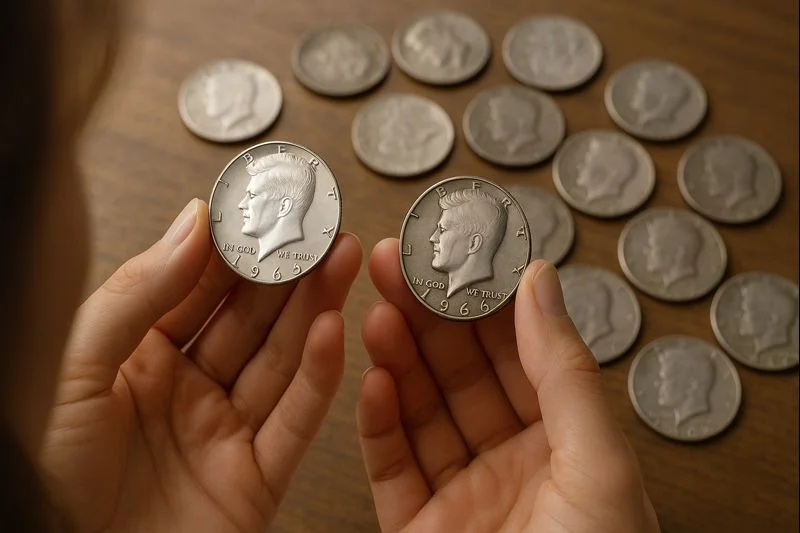
1965–1970: Transitional 40% Silver Era
The Mint reduced silver content in response to rising metal prices. These six years form the second major phase of the series.
1965
The first 40% silver issue. Strike variability appears often. Many pieces show weaker rims and light detail. High-grade examples remain available but require careful evaluation.
1966
Quality improves. Surfaces appear more consistent due to better die preparation. SMS sets continue to define the highest-quality pieces of the decade.
1967
The final SMS year. These coins show uniform surfaces and strong strikes. Circulation pieces remain common, but SMS examples offer the most reliable detail of the silver-clad period.
1968–1970
Proof production returns in 1968 with San Francisco mintmarks. Circulation pieces show mixed strike results.
- 1968–1969: abundant supply on the market.
- 1970-D: one of the key dates of the entire series. No circulation release. Distribution limited to mint sets. This restricts survival and increases demand.
The entire 40% silver group continues to behave as a transitional alloy. Visual toning differs from 90% silver and from clad, making identification straightforward.
1971–1979: Early Clad Years and New Circulation Patterns
1971
The first full copper-nickel clad year. Weight decreases. Luster becomes brighter but less deep than silver issues. Market behavior changes: melt value no longer drives prices.
1972
1972-D produces the No FG variety. It forms when die polishing removes the designer’s initials on the reverse. The variety appears in several die states. It remains easy to confirm with magnification.
1973–1979
Circulation demand decreases. Many halves remain unused in banking channels. Toning patterns shift due to clad layers. Strike softness becomes common on hair detail and eagle feathers.
The period defines how modern business strikes behave. Large mintages ensure wide availability. High-grade pieces appear often, though rim weakness occurs on several dates.
1980–1990s: Maturity of the Clad Series and Changing Demand
1982–1983
No official mint sets were produced. High-grade circulation pieces remain harder to locate. Many coins from these years show marks from storage or handling. Premiums reflect this limited access to preserved specimens.
1987
No circulation strikes. Distribution limited to mint sets. This creates lower availability of worn pieces and increases interest in clean examples. The year stands as one of the more distinct clad issues.
1990s
Minting becomes more consistent. Proof quality improves significantly. Circulation halves appear in large quantities, but actual circulation use continues to decline. Many pieces remain in storage channels rather than commerce.
Collectors often encounter strong proof contrast from this decade. Business strikes vary, but high-grade examples remain accessible.
2002–Present: NIFC Era and Modern Collector Market
2002
Production for circulation stops. All halves become NIFC (Not Intended For Circulation) except for limited special releases. Rolls and bags come from the Mint only. Circulation finds become scarce over time.
2000s and 2010s
NIFC populations remain consistent. Condition levels stay high because most pieces remain in collector packaging. Silver proof sets offer an additional metal group for modern collectors.
2020 – Present
Mintages drop. Many buyers shift toward low-mintage issues. Market behavior for NIFC halves shows stable small premiums, especially for complete date runs.
Modern halves reveal the final stage of the series: limited distribution, consistent finishes, and predictable grading patterns.
Table of Significant Years (1964–Present)
| Year/Range | Significance | Notes |
| 1964 | 90% silver | First year; Accented Hair proof |
| 1965–70 | 40% silver | SMS years; 1970-D key date |
| 1971 | First clad | Major composition change |
| 1972-D | Variety | No FG; strong specialist interest |
| 1982–83 | Supply issue | Limited high-grade survival |
| 1987 | No circulation issue | Mint-set only |
| 2002–Present | NIFC | Limited distribution; stable premiums |
This table outlines the structural points of the series. Each range reflects a shift in metal, usage, or minting approach. These periods remain the main reference points when evaluating mixed lots, cataloguing full date runs, or identifying scarce issues.
Main points illustrated by the table:
- Metal transitions divide the series into groups with different value floors and wear patterns.
- Distribution changes, such as SMS and NIFC formats, affect how often specific dates appear in circulation.
- Low-mintage years create concentration points that collectors monitor more closely.
- Varieties tied to specific dates shape specialist demand and influence authentication steps.
- Periods with limited preservation channels explain why high-grade examples remain scarce for certain years.
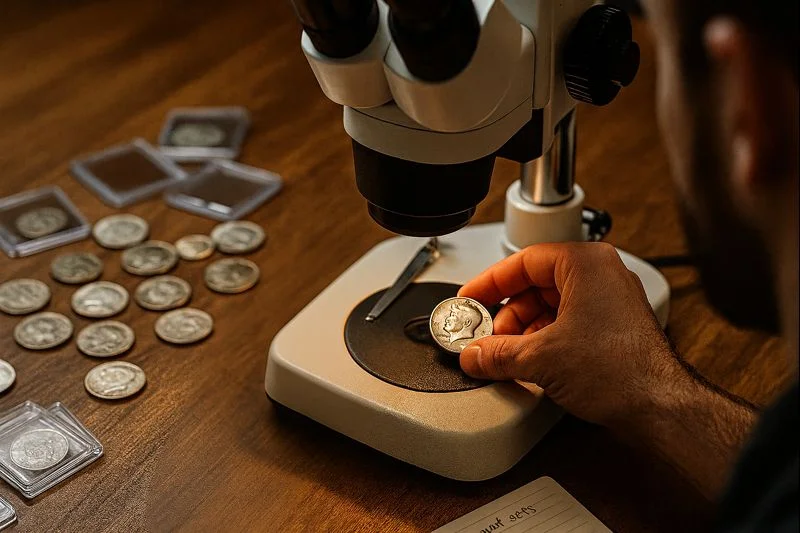
Practical Use of Digital Tools for Year-by-Year Sorting
Collectors often handle large quantities of halves from different decades. Sorting becomes faster when digital aids support classification.
The best free coin identifier app helps identify metal groups and year ranges from a single photo. It assists when dealing with mixed rolls or inherited collections.
Coin ID Scanner remains a practical example. The app identifies the coin type, lists year ranges, detects metal composition, and confirms basic strike information. Its database covers more than 187,000 coins. It supports collectors who need fast recognition without manual cross-checking. Digital tools shorten sorting time, though grading and variety confirmation still depend on visible detail.
Key Observations: How the Kennedy Series Evolves Across the Decades
Several patterns define the long timeline:
- Metal changes divide the series into clear price groups.
- Silver issues behave differently from clad due to intrinsic value.
- Declining circulation use lowers wear on modern dates.
- NIFC years create consistent quality but limited distribution.
- Varieties appear mostly in the early clad period.
- Survival levels depend on storage habits rather than circulation exposure in the later decades.
These trends explain why some dates trade actively while others remain abundant.
Final Overview
The Kennedy half-dollar timeline shows how metal, minting format, and market conditions influence rarity and value. Each phase carries distinct characteristics. The silver years show strong historical interest. The 40% silver period forms a unique transitional group. Early clad coins define the modern business-strike pattern. The NIFC period creates a controlled collector market.
Knowing significant years helps collectors interpret survival patterns, identify scarce issues, and understand how each decade contributes to the series. Knowing this, you will be able to evaluate and classify the coins across the full date series.